

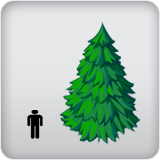
Height: 30 feet Spread: 25 feet
Sunlight:
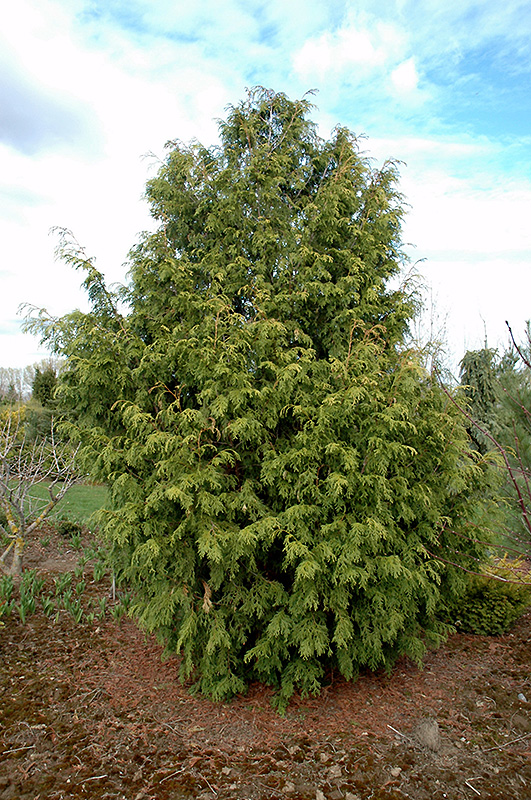
Hardiness Zone: 5a Other Names: Japanese White Cedar Description: A relatively uncommon broadly spreading evergreen tree from the Orient with attractive dark green foliage which droops in sprays from somewhat pendulous branches, overall fine textural effect; tends to turn a yellowish-brown in winter Ornamental Features Japanese Arborvitae is primarily valued in the landscape for its ornamental globe-shaped form. It has dark green evergreen foliage. The scale-like sprays of foliage turn coppery-bronze in the fall, which persists throughout the winter. The shaggy antique red bark adds an interesting dimension to the landscape. Landscape Attributes Japanese Arborvitae is an evergreen tree with a strong central leader and a more or less rounded form. It lends an extremely fine and delicate texture to the landscape composition which can make it a great accent feature on this basis alone. This is a relatively low maintenance tree. When pruning is necessary, it is recommended to only trim back the new growth of the current season, other than to remove any dieback. It has no significant negative characteristics. Japanese Arborvitae is recommended for the following landscape applications; Planting & Growing Japanese Arborvitae will grow to be about 30 feet tall at maturity, with a spread of 25 feet. It has a low canopy with a typical clearance of 1 foot from the ground, and should not be planted underneath power lines. It grows at a slow rate, and under ideal conditions can be expected to live for 50 years or more. This tree does best in full sun to partial shade. It is quite adaptable, prefering to grow in average to wet conditions, and will even tolerate some standing water. It is not particular as to soil type or pH. It is somewhat tolerant of urban pollution, and will benefit from being planted in a relatively sheltered location. Consider applying a thick mulch around the root zone in winter to protect it in exposed locations or colder microclimates. This species is not originally from North America.








By
Ben Richard
/ January 8, 2025


Characteristics
Applications
Features & Attributes