

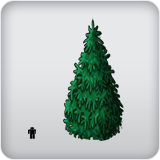
Height: 60 feet Spread: 20 feet
Sunlight:
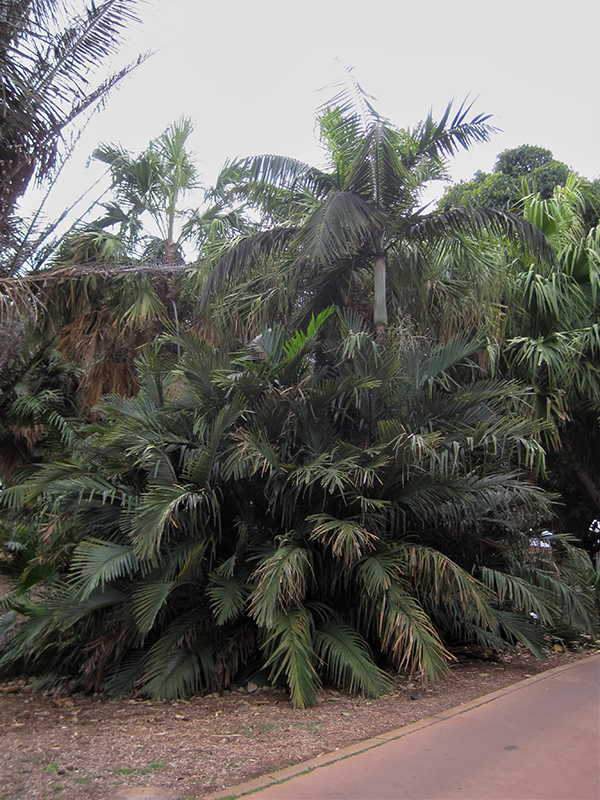
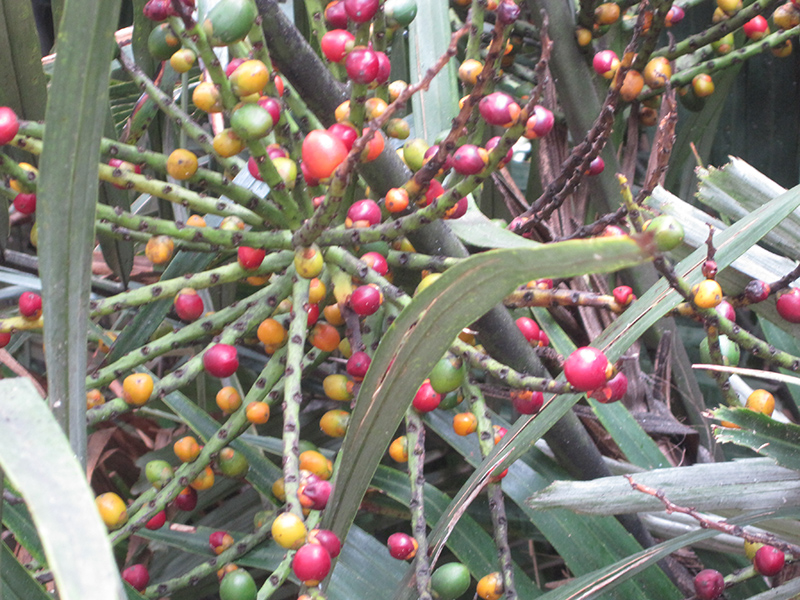
Hardiness Zone: 9b Other Names: Australian Sugar Palm Description: A large, clumping palm that is dense and wide spreading; glossy, dark green fronds are widely spaced along the trunk which lacks a crownshaft; trunks die after flowering; very sensitive to poor drainage; great for large landscapes Ornamental Features Arenga Palm features showy chains of yellow flowers hanging below the branches from late spring to early summer. It has dark green foliage with gray undersides. The glossy narrow pinnately compound leaves remain dark green throughout the winter. The red fruits with orange variegation and which fade to brown over time are held in clusters from early summer to early fall. Landscape Attributes Arenga Palm is a multi-stemmed evergreen tree with a towering form, with a high canopy of foliage concentrated at the top of the plant. Its relatively coarse texture can be used to stand it apart from other landscape plants with finer foliage. This tree will require occasional maintenance and upkeep, and should not require much pruning, except when necessary, such as to remove dieback. It is a good choice for attracting birds to your yard. Gardeners should be aware of the following characteristic(s) that may warrant special consideration; Arenga Palm is recommended for the following landscape applications; Planting & Growing Arenga Palm will grow to be about 60 feet tall at maturity, with a spread of 20 feet. It has a low canopy with a typical clearance of 2 feet from the ground, and should not be planted underneath power lines. It grows at a medium rate, and under ideal conditions can be expected to live for 60 years or more. This is a self-pollinating variety, so it doesn't require a second plant nearby to set fruit. This tree does best in full sun to partial shade. It does best in average to evenly moist conditions, but will not tolerate standing water. It is not particular as to soil type or pH. It is somewhat tolerant of urban pollution. This species is not originally from North America.







By
Ben Richard
/ January 8, 2025


Characteristics
Applications
Features & Attributes