

Height: 82 feet Spread: 82 feet
Sunlight:
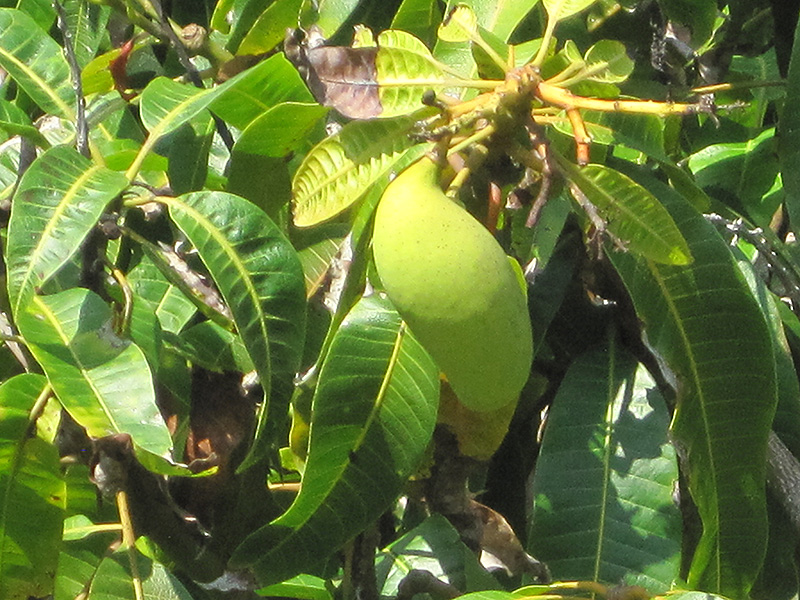
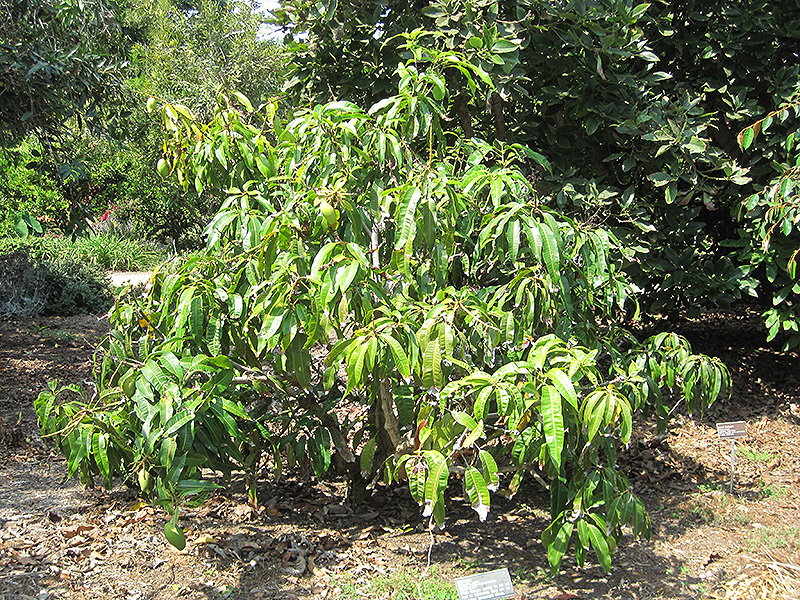
Hardiness Zone: 9b Description: A large evergreen fruit tree, presenting long, deep green, glossy lanceolate leaves and panicles of white and pink, fragrant flowers; large fruits are produced mid-late spring; sweet and juicy, great for a variety of applications, from savory to sweet Edible Qualities Mango is a large tree that is typically grown for its edible qualities. It produces green oval fruit (technically 'drupes') with yellow overtones and orange flesh which are usually ready for picking from late spring to early summer. The fruits have a sweet taste with a juicy texture and a sweet fragrance. The fruit are most often used in the following ways: Features & Attributes Mango has attractive dark green foliage with light green veins which emerges coppery-bronze in spring on a tree with a round habit of growth. The glossy pointy leaves are highly ornamental and remain dark green throughout the winter. This is an evergreen tree with a more or less rounded form. Its average texture blends into the landscape, but can be balanced by one or two finer or coarser trees or shrubs for an effective composition. This is a relatively low maintenance plant, and may require the occasional pruning to look its best. It is a good choice for attracting birds and bees to your yard. It has no significant negative characteristics. Aside from its primary use as an edible, Mango is sutiable for the following landscape applications; Planting & Growing Mango will grow to be about 82 feet tall at maturity, with a spread of 82 feet. It has a high canopy of foliage that sits well above the ground, and should not be planted underneath power lines. As it matures, the lower branches of this tree can be strategically removed to create a high enough canopy to support unobstructed human traffic underneath. It grows at a medium rate, and under ideal conditions can be expected to live for approximately 20 years. This is a self-pollinating variety, so it doesn't require a second plant nearby to set fruit. This plant is typically grown in a designated edibles garden. It should only be grown in full sunlight. It does best in average to evenly moist conditions, but will not tolerate standing water. It is not particular as to soil pH, but grows best in sandy soils. It is somewhat tolerant of urban pollution. This species is not originally from North America..







By
Ben Richard
/ January 8, 2025


Characteristics
Applications
Features & Attributes