

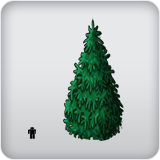
Height: 60 feet Spread: 30 feet
Sunlight:
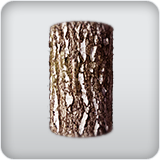
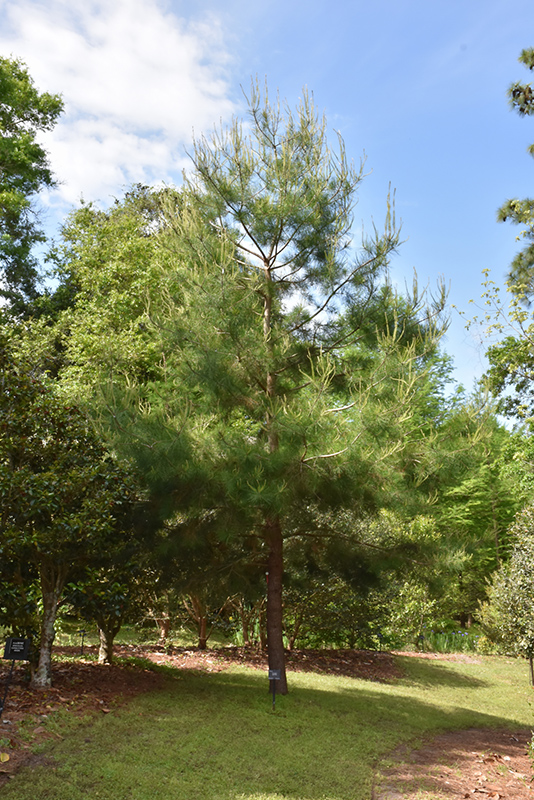
Hardiness Zone: 7b Other Names: Spruce Pine, Walter's Pine Description: A majestic and artistic evergreen tree featuring a pyramidal to oval crown with dark green needles, and a trunk that is often bent and twisted; slow growing, eventually becoming quite large; adaptable, but requires regular moisture Ornamental Features Cedar Pine is primarily valued in the landscape for its decidedly oval form. It has forest green evergreen foliage. The twisted needles remain forest green throughout the winter. The brown fruits are held in cones from mid summer to late winter. The fruit can be messy if allowed to drop on the lawn or walkways, and may require occasional clean-up. The rough gray bark adds an interesting dimension to the landscape. Landscape Attributes Cedar Pine is a dense evergreen tree with a strong central leader and a shapely oval form. Its average texture blends into the landscape, but can be balanced by one or two finer or coarser trees or shrubs for an effective composition. This tree will require occasional maintenance and upkeep. When pruning is necessary, it is recommended to only trim back the new growth of the current season, other than to remove any dieback. It is a good choice for attracting squirrels to your yard. Gardeners should be aware of the following characteristic(s) that may warrant special consideration; Cedar Pine is recommended for the following landscape applications; Planting & Growing Cedar Pine will grow to be about 60 feet tall at maturity, with a spread of 30 feet. It has a low canopy with a typical clearance of 3 feet from the ground, and should not be planted underneath power lines. It grows at a slow rate, and under ideal conditions can be expected to live for 60 years or more. This tree should only be grown in full sunlight. It is quite adaptable, prefering to grow in average to wet conditions, and will even tolerate some standing water. It is not particular as to soil pH, but grows best in sandy soils, and is able to handle environmental salt. It is somewhat tolerant of urban pollution. This species is native to parts of North America.








By
Ben Richard
/ January 8, 2025


Characteristics
Applications
Features & Attributes