

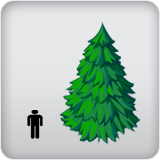
Height: 35 feet Spread: 30 feet
Sunlight:
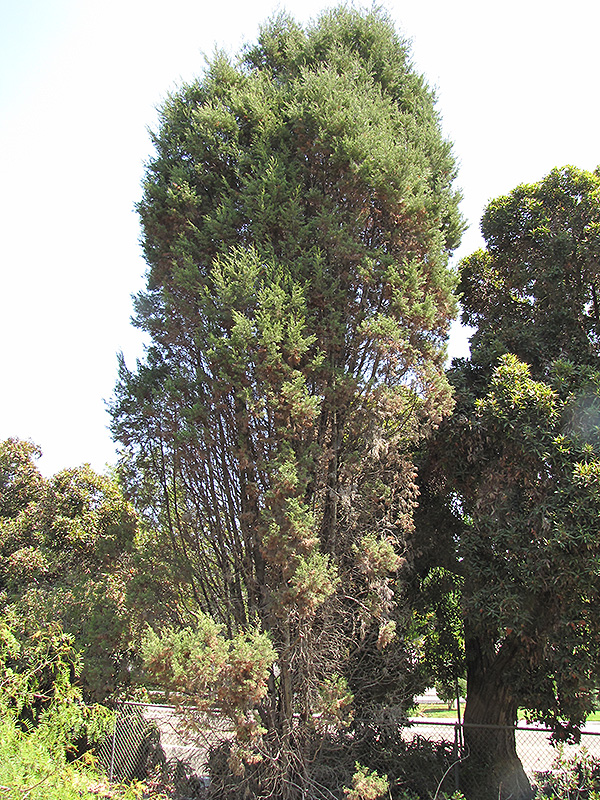
Hardiness Zone: 9a Other Names: syn. Hesperocyparis stephensonii Description: An upward, erect variety that will tend to become more rounded and spreading with age; native only to extreme Southern California, it is very tolerant of arid conditions; a seriously endangered species in its wild range Ornamental Features Cuyamaca Cypress is primarily valued in the landscape for its ornamental upright and spreading habit of growth. It has attractive bluish-green foliage with hints of silver. The glossy threadlike sprays of foliage are highly ornamental and remain bluish-green throughout the winter. Landscape Attributes Cuyamaca Cypress is a dense evergreen tree with an upright spreading habit of growth. It lends an extremely fine and delicate texture to the landscape composition which can make it a great accent feature on this basis alone. This is a relatively low maintenance tree, and should not require much pruning, except when necessary, such as to remove dieback. Deer don't particularly care for this plant and will usually leave it alone in favor of tastier treats. It has no significant negative characteristics. Cuyamaca Cypress is recommended for the following landscape applications; Planting & Growing Cuyamaca Cypress will grow to be about 35 feet tall at maturity, with a spread of 30 feet. It has a low canopy with a typical clearance of 3 feet from the ground, and should not be planted underneath power lines. It grows at a medium rate, and under ideal conditions can be expected to live for 60 years or more. This tree should only be grown in full sunlight. It prefers dry to average moisture levels with very well-drained soil, and will often die in standing water. It is considered to be drought-tolerant, and thus makes an ideal choice for xeriscaping or the moisture-conserving landscape. It is not particular as to soil pH, but grows best in poor soils. It is somewhat tolerant of urban pollution. This species is native to parts of North America.








By
Ben Richard
/ January 8, 2025


Characteristics
Applications
Features & Attributes