

Height: 6 inches Spacing: 6 inches
Sunlight:
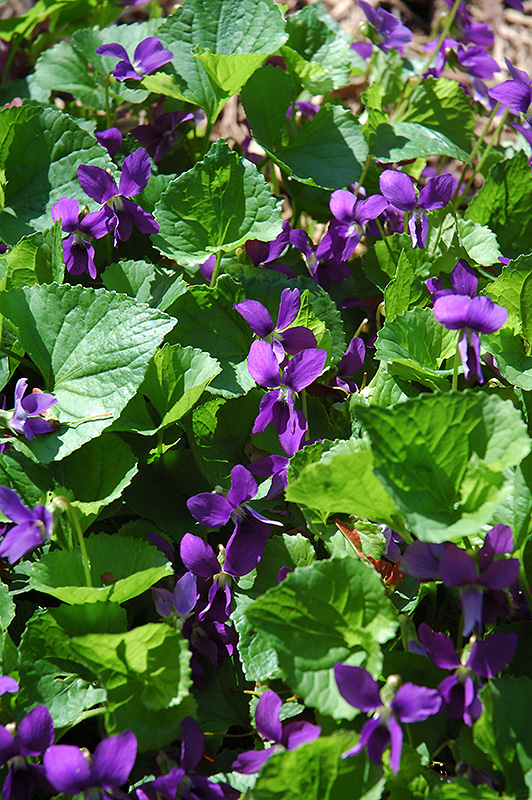
Hardiness Zone: 3a Ornamental Features Blue Marsh Violet features delicate lightly-scented royal blue flowers at the ends of the stems from early to late spring. Its crinkled heart-shaped leaves remain green in color throughout the season. Landscape Attributes Blue Marsh Violet is an herbaceous perennial with a ground-hugging habit of growth. Its relatively fine texture sets it apart from other garden plants with less refined foliage. This is a high maintenance plant that will require regular care and upkeep, and should only be pruned after flowering to avoid removing any of the current season's flowers. Deer don't particularly care for this plant and will usually leave it alone in favor of tastier treats. Gardeners should be aware of the following characteristic(s) that may warrant special consideration; Blue Marsh Violet is recommended for the following landscape applications; Planting & Growing Blue Marsh Violet will grow to be only 6 inches tall at maturity, with a spread of 8 inches. When grown in masses or used as a bedding plant, individual plants should be spaced approximately 6 inches apart. Its foliage tends to remain low and dense right to the ground. It grows at a fast rate, and under ideal conditions can be expected to live for approximately 3 years. As an herbaceous perennial, this plant will usually die back to the crown each winter, and will regrow from the base each spring. Be careful not to disturb the crown in late winter when it may not be readily seen! This plant does best in partial shade to shade. It prefers to grow in average to moist conditions, and shouldn't be allowed to dry out. It is not particular as to soil type or pH. It is somewhat tolerant of urban pollution. Consider covering it with a thick layer of mulch in winter to protect it in exposed locations or colder microclimates. This species is native to parts of North America.









By
Ben Richard
/ January 8, 2025


Characteristics
Applications
Features & Attributes