

Height: 8 feet Spread: 5 feet
Sunlight:
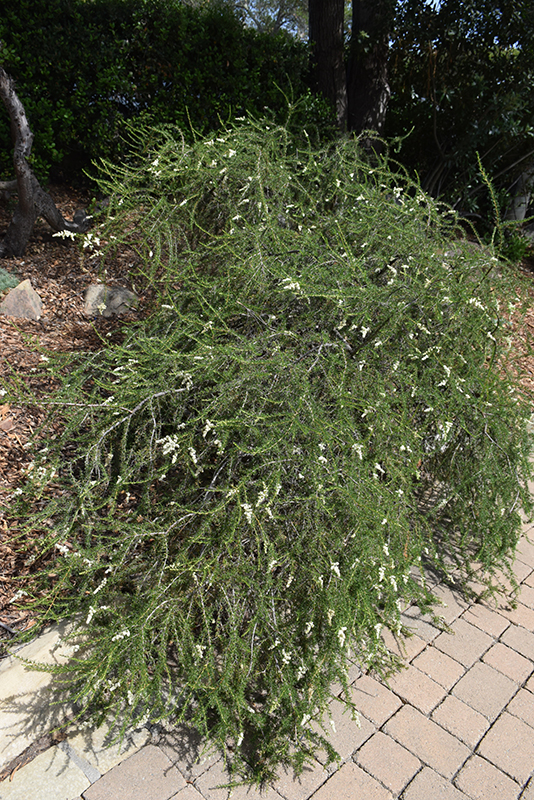
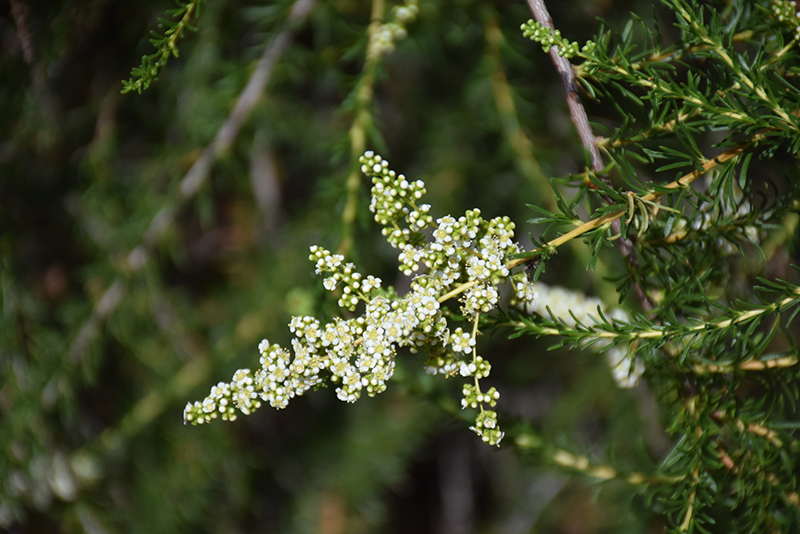
Hardiness Zone: 8a Other Names: Greasewood Description: The dominant chaparral plant throughout California commonly found on dry hills, slopes or woodlands; oils in the foliage and branches make the plant highly flammable, especially when dry; tiny white flower clusters appear in late winter Ornamental Features Chamise features showy clusters of white tubular flowers at the ends of the branches from mid winter to mid spring. It has bluish-green foliage with hints of olive green. The tiny needles remain bluish-green throughout the winter. The shaggy brick red bark adds an interesting dimension to the landscape. Landscape Attributes Chamise is a multi-stemmed evergreen shrub with a mounded form. It lends an extremely fine and delicate texture to the landscape composition which can make it a great accent feature on this basis alone. This is a relatively low maintenance shrub, and should only be pruned after flowering to avoid removing any of the current season's flowers. It is a good choice for attracting birds to your yard, but is not particularly attractive to deer who tend to leave it alone in favor of tastier treats. It has no significant negative characteristics. Chamise is recommended for the following landscape applications; Planting & Growing Chamise will grow to be about 8 feet tall at maturity, with a spread of 5 feet. It has a low canopy with a typical clearance of 1 foot from the ground, and is suitable for planting under power lines. It grows at a slow rate, and under ideal conditions can be expected to live for 40 years or more. As this plant tends to go dormant in summer, it is best interplanted with late-season bloomers to hide the dying foliage. This shrub should only be grown in full sunlight. It is very adaptable to both dry and moist growing conditions, but will not tolerate any standing water. It is considered to be drought-tolerant, and thus makes an ideal choice for xeriscaping or the moisture-conserving landscape. This plant does not require much in the way of fertilizing once established. It is not particular as to soil pH, but grows best in poor soils. It is somewhat tolerant of urban pollution. This species is native to parts of North America..










By
Ben Richard
/ January 8, 2025


Characteristics
Applications
Features & Attributes