

Height: 6 feet Spread: 5 feet
Sunlight:
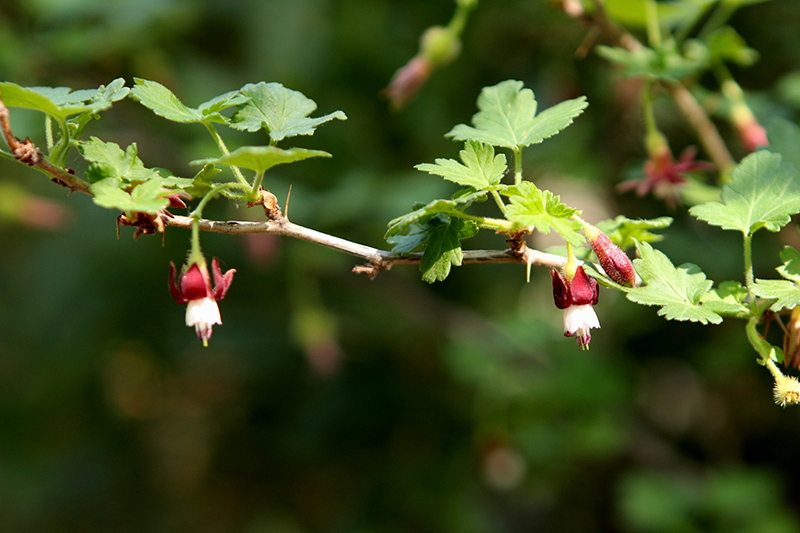
Hardiness Zone: 8a Other Names: Grossularia amara, Ribes mariposanum Description: A sprawling deciduous California native shrub that produces dainty burgundy and white flowers that appear along the branches in late winter to spring, followed by sticky, bitter red berries; a vigorous plant, good for dry slopes Ornamental Features Bitter Gooseberry features dainty nodding burgundy bell-shaped flowers with white overtones along the branches from late winter to late spring. It features an abundance of magnificent red berries from early to late summer, which fade to deep purple over time. It has forest green deciduous foliage. The serrated lobed leaves turn outstanding shades of yellow, orange and scarlet in the fall. The spiny gray bark adds an interesting dimension to the landscape. Landscape Attributes Bitter Gooseberry is a multi-stemmed deciduous shrub with an upright spreading habit of growth. Its average texture blends into the landscape, but can be balanced by one or two finer or coarser trees or shrubs for an effective composition. This shrub will require occasional maintenance and upkeep, and should only be pruned after flowering to avoid removing any of the current season's flowers. It is a good choice for attracting birds and butterflies to your yard. Gardeners should be aware of the following characteristic(s) that may warrant special consideration; Bitter Gooseberry is recommended for the following landscape applications; Planting & Growing Bitter Gooseberry will grow to be about 6 feet tall at maturity, with a spread of 5 feet. It tends to be a little leggy, with a typical clearance of 1 foot from the ground, and is suitable for planting under power lines. It grows at a medium rate, and under ideal conditions can be expected to live for approximately 15 years. As this plant tends to go dormant in summer, it is best interplanted with late-season bloomers to hide the dying foliage. This is a self-pollinating variety, so it doesn't require a second plant nearby to set fruit. This shrub performs well in both full sun and full shade. It is very adaptable to both dry and moist growing conditions, but will not tolerate any standing water. It is considered to be drought-tolerant, and thus makes an ideal choice for xeriscaping or the moisture-conserving landscape. This plant does not require much in the way of fertilizing once established. It is not particular as to soil type or pH. It is somewhat tolerant of urban pollution. This species is native to parts of North America.











By
Ben Richard
/ January 8, 2025


Characteristics
Applications
Features & Attributes