

Height: 50 feet Spread: 50 feet
Sunlight:
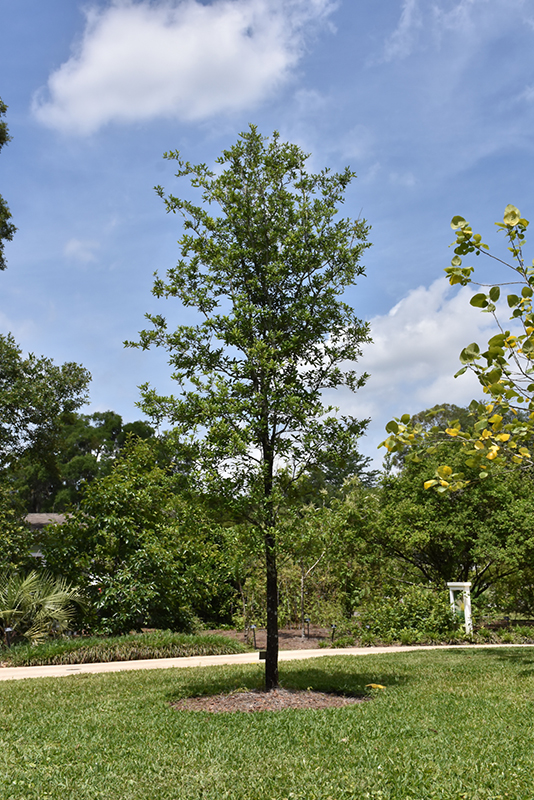
Hardiness Zone: 7a Other Names: Coastal Live Oak Description: A shrubby, small native oak that eventually produces a broad, rounded crown, creating a shade canopy; evergreen foliage is leathery, dark green and glossy; prefers the xeric, sandy soils of coastal dunes and scrublands; a very impressive landscape tree Ornamental Features Sand Live Oak has dark green foliage with white undersides on a tree with a round habit of growth. The glossy oval leaves remain dark green throughout the winter. However, the fruit can be messy in the landscape and may require occasional clean-up. Landscape Attributes Sand Live Oak is a dense evergreen tree with a more or less rounded form. Its average texture blends into the landscape, but can be balanced by one or two finer or coarser trees or shrubs for an effective composition. This tree will require occasional maintenance and upkeep, and is best pruned in late winter once the threat of extreme cold has passed. It is a good choice for attracting birds, butterflies and squirrels to your yard. Gardeners should be aware of the following characteristic(s) that may warrant special consideration; Sand Live Oak is recommended for the following landscape applications; Planting & Growing Sand Live Oak will grow to be about 50 feet tall at maturity, with a spread of 50 feet. It has a low canopy with a typical clearance of 3 feet from the ground, and should not be planted underneath power lines. It grows at a slow rate, and under ideal conditions can be expected to live to a ripe old age of 150 years or more; think of this as a heritage tree for future generations! This tree does best in full sun to partial shade. It is very adaptable to both dry and moist locations, and should do just fine under average home landscape conditions. It is considered to be drought-tolerant, and thus makes an ideal choice for xeriscaping or the moisture-conserving landscape. This plant should be periodically fertilized throughout the active growing season with a specially-formulated acidic fertilizer. It is very fussy about its soil conditions and must have sandy, acidic soils to ensure success, and is subject to chlorosis (yellowing) of the foliage in alkaline soils, and is able to handle environmental salt. It is highly tolerant of urban pollution and will even thrive in inner city environments. This species is native to parts of North America.









By
Ben Richard
/ January 8, 2025


Characteristics
Applications
Features & Attributes