

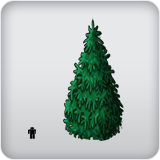
Height: 50 feet Spread: 20 feet
Sunlight:
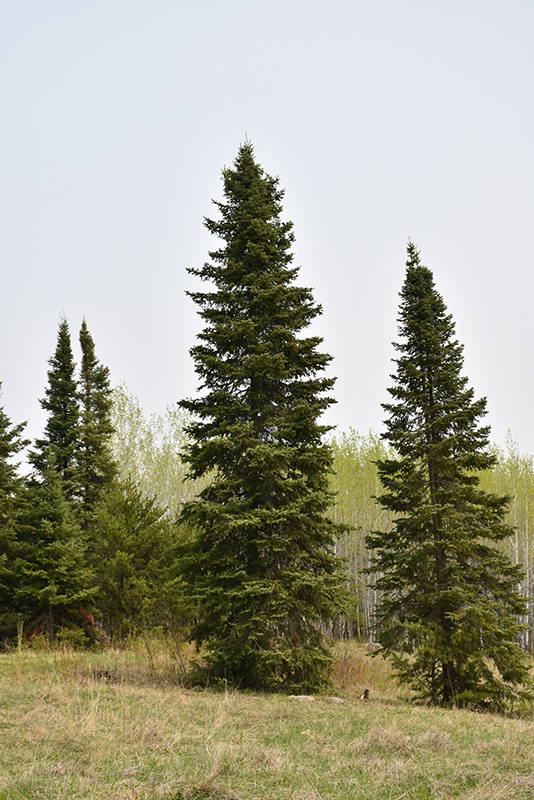
Hardiness Zone: 3a Description: A narrowly conical conifer which features fine, dark bluish-green needles and a spire-like crown; small dark purple cones turn reddish brown and persist for years; slow growing with a shallow root system; site with some wind shelter; tolerates wet sites Ornamental Features Black Spruce is primarily grown for its highly ornamental fruit. The deep purple fruits which fade to brown over time are held in abundance in spectacular cones from late summer to late fall. It has attractive silvery blue-variegated dark green foliage which emerges bluish-green in spring. The needles are highly ornamental and remain dark green throughout the winter. The shaggy gray bark adds an interesting dimension to the landscape. Landscape Attributes Black Spruce is a dense evergreen tree with a strong central leader and a distinctive and refined pyramidal form. It lends an extremely fine and delicate texture to the landscape composition which can make it a great accent feature on this basis alone. This is a relatively low maintenance tree. When pruning is necessary, it is recommended to only trim back the new growth of the current season, other than to remove any dieback. It has no significant negative characteristics. Black Spruce is recommended for the following landscape applications; Planting & Growing Black Spruce will grow to be about 50 feet tall at maturity, with a spread of 20 feet. It has a low canopy, and should not be planted underneath power lines. It grows at a slow rate, and under ideal conditions can be expected to live for 50 years or more. This tree should only be grown in full sunlight. It is quite adaptable, prefering to grow in average to wet conditions, and will even tolerate some standing water. This plant does not require much in the way of fertilizing once established. It is not particular as to soil type, but has a definite preference for acidic soils. It is quite intolerant of urban pollution, therefore inner city or urban streetside plantings are best avoided, and will benefit from being planted in a relatively sheltered location. Consider applying a thick mulch around the root zone over the growing season to conserve soil moisture. This species is native to parts of North America.









By
Ben Richard
/ January 8, 2025


Characteristics
Applications
Features & Attributes