

Height: 15 feet Spread: 10 feet
Sunlight:
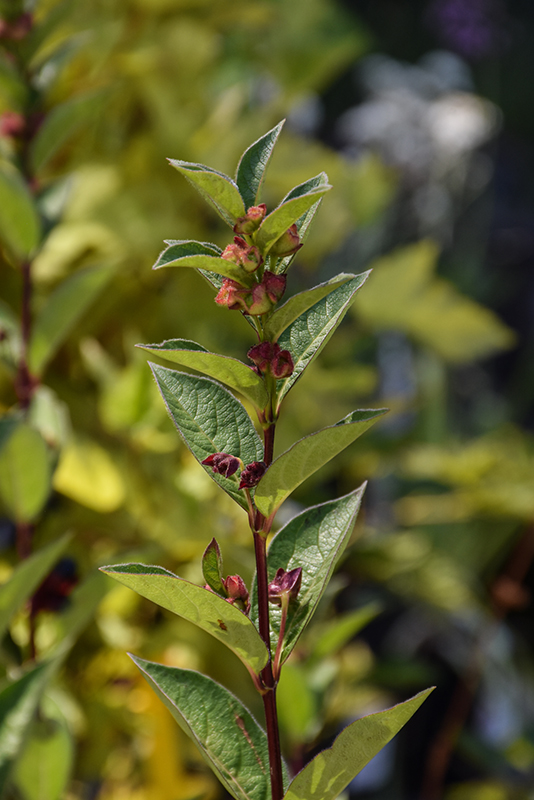
Hardiness Zone: 4a Other Names: Bearberry Honeysuckle, Californian Honeysuckle Description: A long lived shrub presenting sturdy stems with bright green leaves arranged in pairs; in spring to summer, dangling pairs of yellow flowers appear with leafy bracts that turn brilliant red in fall; black berries are food for wildlife; very adaptable Ornamental Features Twinberry Honeysuckle features dainty yellow flowers with orange overtones and dark red bracts along the branches from mid spring to mid summer. It features an abundance of magnificent deep purple berries from late summer to late fall, which fade to black over time. It has dark green foliage with grayish green undersides. The pointy leaves do not develop any appreciable fall color. The smooth bark and dark red branches add an interesting dimension to the landscape. Landscape Attributes Twinberry Honeysuckle is a multi-stemmed deciduous shrub with an upright spreading habit of growth. Its average texture blends into the landscape, but can be balanced by one or two finer or coarser trees or shrubs for an effective composition. This shrub will require occasional maintenance and upkeep, and is best pruned in late winter once the threat of extreme cold has passed. It is a good choice for attracting butterflies and hummingbirds to your yard. It has no significant negative characteristics. Twinberry Honeysuckle is recommended for the following landscape applications; Planting & Growing Twinberry Honeysuckle will grow to be about 15 feet tall at maturity, with a spread of 10 feet. It has a low canopy with a typical clearance of 1 foot from the ground, and is suitable for planting under power lines. It grows at a medium rate, and under ideal conditions can be expected to live for 50 years or more. This shrub does best in full sun to partial shade. It is quite adaptable, prefering to grow in average to wet conditions, and will even tolerate some standing water. This plant should not require much in the way of fertilizing once established, although it may appreciate a shot of general-purpose fertilizer from time to time early in the growing season. It is not particular as to soil type or pH, and is able to handle environmental salt. It is highly tolerant of urban pollution and will even thrive in inner city environments. This species is native to parts of North America.











By
Ben Richard
/ January 8, 2025


Characteristics
Applications
Features & Attributes