

Height: 20 feet Spread: 15 feet
Sunlight:
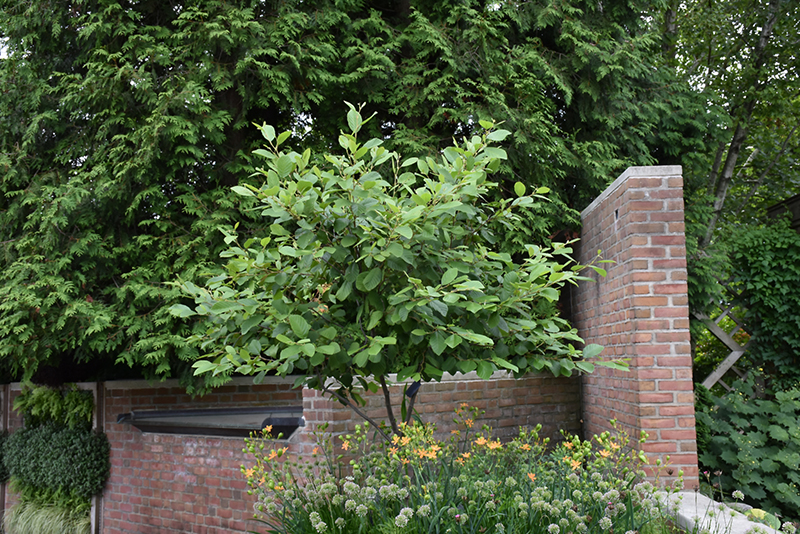
Hardiness Zone: 4a Other Names: Hazel Alder, Brookside Alder, Tag Alder Description: A handsome large shrub or small tree presenting dark green foliage and shiny, gray-brown bark; pale yellow catkins in spring followed by clusters of brown fruiting cones that persist up to a year; excellent for erosion control Ornamental Features Smooth Alder features showy clusters of yellow catkins hanging below the branches from early to mid spring before the leaves. The dark brown fruits are held in abundance in spectacular cones from late summer to late winter. It has dark green foliage with grayish green undersides which emerges light green in spring. The glossy oval leaves turn outstanding shades of yellow and in the fall. The smooth gray bark and dark brown branches add an interesting dimension to the landscape. Landscape Attributes Smooth Alder is a multi-stemmed deciduous shrub with an upright spreading habit of growth. Its average texture blends into the landscape, but can be balanced by one or two finer or coarser trees or shrubs for an effective composition. This is a relatively low maintenance shrub, and is best pruned in late winter once the threat of extreme cold has passed. It is a good choice for attracting birds and bees to your yard. Gardeners should be aware of the following characteristic(s) that may warrant special consideration; Smooth Alder is recommended for the following landscape applications; Planting & Growing Smooth Alder will grow to be about 20 feet tall at maturity, with a spread of 15 feet. It has a low canopy with a typical clearance of 1 foot from the ground, and is suitable for planting under power lines. It grows at a fast rate, and under ideal conditions can be expected to live for 80 years or more. This shrub does best in full sun to partial shade. It is quite adaptable, prefering to grow in average to wet conditions, and will even tolerate some standing water. This plant is capable of fixing its own nitrogen, which means that it is effectively self-fertilizing. As a result it should not require supplemental fertilizing, and if you do fertilize it, be sure to only use a low-nitrogen fertilizer to promote root growth. It is not particular as to soil type or pH. It is somewhat tolerant of urban pollution. This species is native to parts of North America.











By
Ben Richard
/ January 8, 2025


Characteristics
Applications
Features & Attributes