

Height: 24 inches Spread: 24 inches
Sunlight:
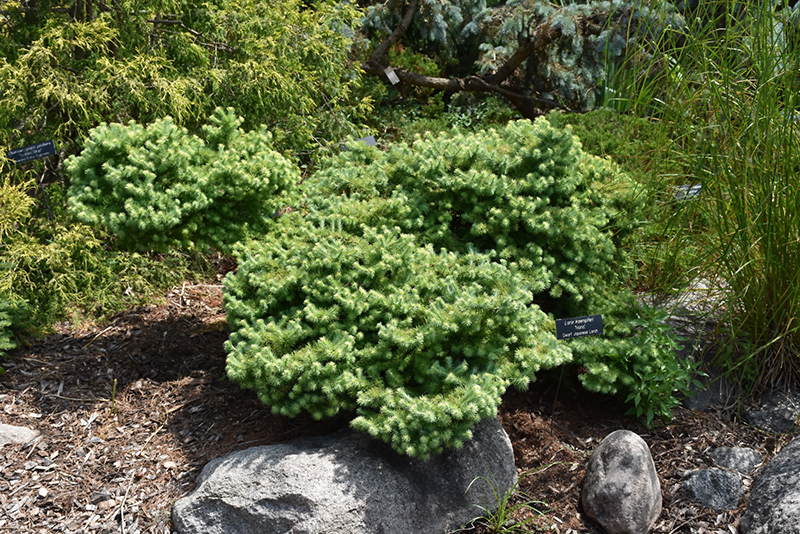
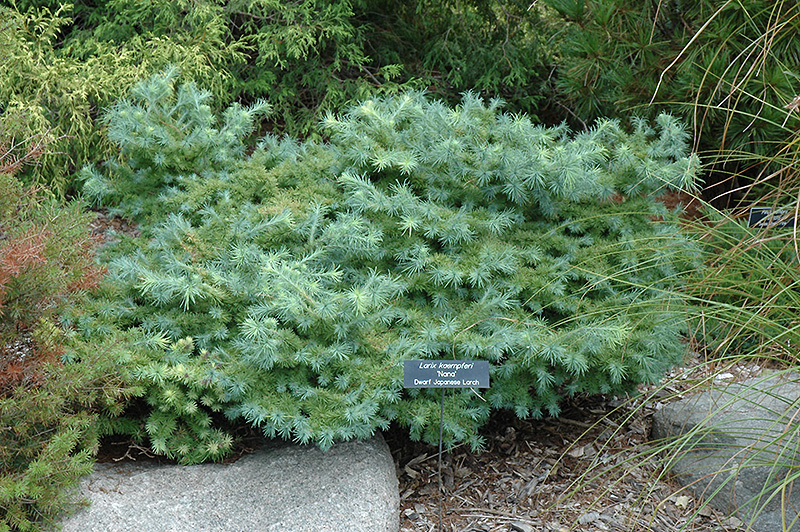
Hardiness Zone: 4a Description: This elegant variety has soft green needles that change to a stunning golden yellow in the fall, on a very dense plant with a globose habit; in winter, red-brown bark covered with short spurs is revealed; an interesting addition to the garden composition Ornamental Features Dwarf Japanese Larch is primarily valued in the garden for its ornamental globe-shaped form. It has bluish-green deciduous foliage which emerges light green in spring. The needle-like leaves turn an outstanding yellow in the fall. The gold stems are very effective and add winter interest. Landscape Attributes Dwarf Japanese Larch is a multi-stemmed deciduous shrub with a more or less rounded form. It lends an extremely fine and delicate texture to the landscape composition which should be used to full effect. This is a relatively low maintenance shrub, and should not require much pruning, except when necessary, such as to remove dieback. Deer don't particularly care for this plant and will usually leave it alone in favor of tastier treats. It has no significant negative characteristics. Dwarf Japanese Larch is recommended for the following landscape applications; Planting & Growing Dwarf Japanese Larch will grow to be about 24 inches tall at maturity, with a spread of 24 inches. It tends to fill out right to the ground and therefore doesn't necessarily require facer plants in front. It grows at a slow rate, and under ideal conditions can be expected to live for 50 years or more. This shrub does best in full sun to partial shade. It is quite adaptable, prefering to grow in average to wet conditions, and will even tolerate some standing water. It is not particular as to soil type, but has a definite preference for acidic soils. It is quite intolerant of urban pollution, therefore inner city or urban streetside plantings are best avoided. Consider applying a thick mulch around the root zone in winter to protect it in exposed locations or colder microclimates. This is a selected variety of a species not originally from North America.










By
Ben Richard
/ January 8, 2025


Characteristics
Applications
Features & Attributes