

Height: 10 feet Spread: 4 feet
Sunlight:
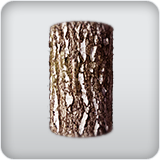
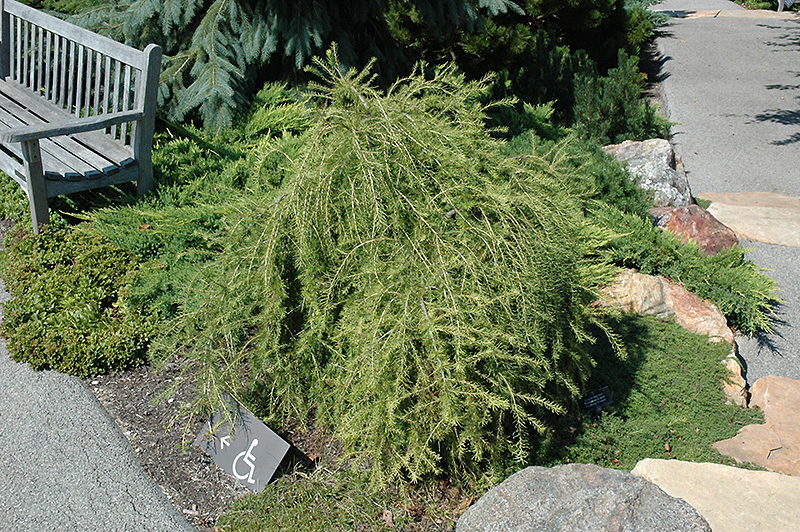
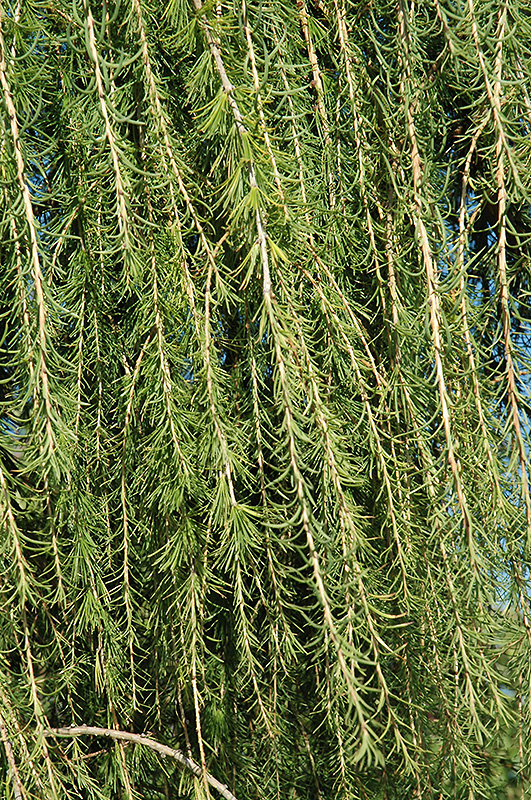
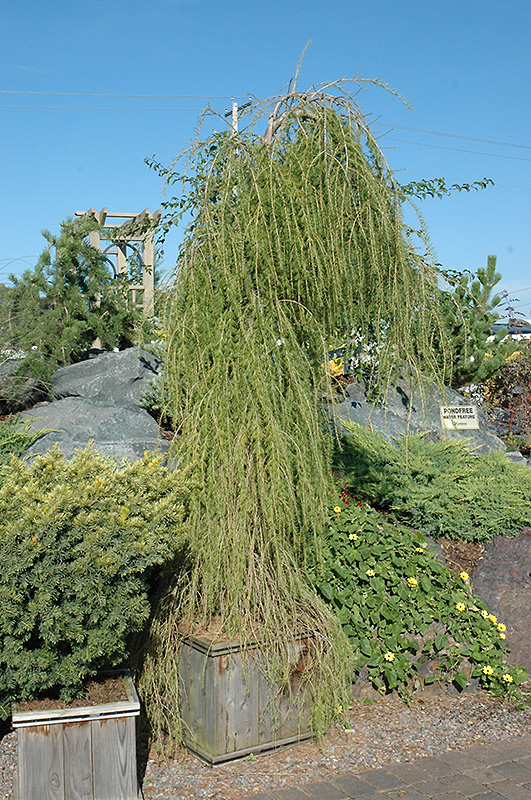
Hardiness Zone: 3a Other Names: Common Larch; European Larch Description: A distinguished must-have garden shrub for the collector, this is a rare dwarf form of this deciduous conifer, narrowly upright with graceful weeping branches very close to the trunk, slow growing, dense and compact, foliage turns brilliant gold in fall Ornamental Features Puli Weeping Larch is primarily valued in the landscape or garden for its highly ornamental weeping form. It has bluish-green deciduous foliage which emerges light green in spring. The needle-like leaves turn an outstanding gold in the fall. The rough gray bark and gold branches add an interesting dimension to the landscape. Landscape Attributes Puli Weeping Larch is a dense multi-stemmed deciduous shrub with a rounded form and gracefully weeping branches. It lends an extremely fine and delicate texture to the landscape composition which can make it a great accent feature on this basis alone. This is a relatively low maintenance shrub, and is best pruned in late winter once the threat of extreme cold has passed. Deer don't particularly care for this plant and will usually leave it alone in favor of tastier treats. It has no significant negative characteristics. Puli Weeping Larch is recommended for the following landscape applications; Planting & Growing Puli Weeping Larch will grow to be about 10 feet tall at maturity, with a spread of 4 feet. It has a low canopy, and is suitable for planting under power lines. It grows at a slow rate, and under ideal conditions can be expected to live for 60 years or more. This shrub does best in full sun to partial shade. It is quite adaptable, prefering to grow in average to wet conditions, and will even tolerate some standing water. It is not particular as to soil type or pH. It is somewhat tolerant of urban pollution. This is a selected variety of a species not originally from North America.











By
Ben Richard
/ January 8, 2025


Characteristics
Applications
Features & Attributes