

Plant Height: 3 feet Flower Height: 4 feet Spacing: 4 feet
Sunlight:
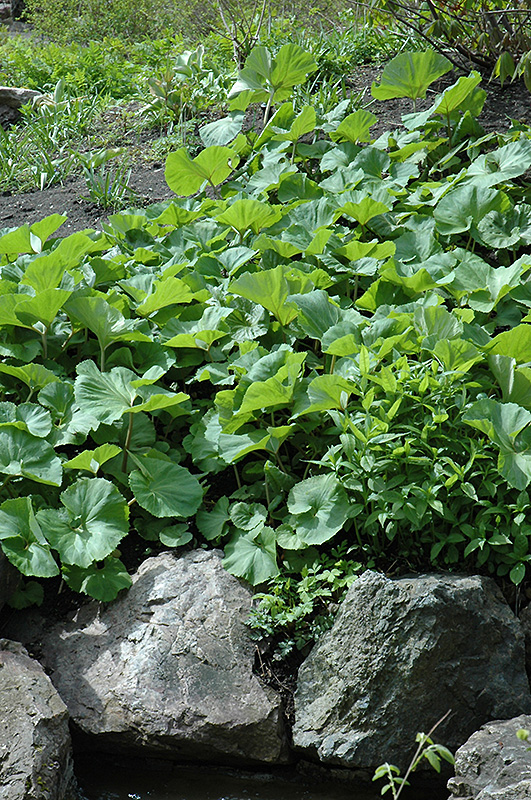
Hardiness Zone: 4b Other Names: Fuki, Bog Rhubarb Description: Truly exotic in character with large leaves making this Asian import an interesting addition to the bog or moist shade garden; large leaves give it an almost prehistoric appeal Ornamental Features Japanese Butterbur's attractive large tomentose round leaves remain green in color with curious silver undersides throughout the season on a plant with a towering habit of growth. It features bold spikes of creamy white flowers rising above the foliage in early spring before the leaves. Landscape Attributes Japanese Butterbur is a dense herbaceous perennial with a rigidly upright and towering form. Its wonderfully bold, coarse texture can be very effective in a balanced garden composition. This is a high maintenance plant that will require regular care and upkeep, and should be cut back in late fall in preparation for winter. Gardeners should be aware of the following characteristic(s) that may warrant special consideration; Japanese Butterbur is recommended for the following landscape applications; Planting & Growing Japanese Butterbur will grow to be about 3 feet tall at maturity extending to 4 feet tall with the flowers, with a spread of 4 feet. When grown in masses or used as a bedding plant, individual plants should be spaced approximately 4 feet apart. It grows at a fast rate, and under ideal conditions can be expected to live for approximately 20 years. As an herbaceous perennial, this plant will usually die back to the crown each winter, and will regrow from the base each spring. Be careful not to disturb the crown in late winter when it may not be readily seen! This plant does best in full sun to partial shade. It prefers to grow in moist to wet soil, and will even tolerate some standing water. It is not particular as to soil type or pH. It is highly tolerant of urban pollution and will even thrive in inner city environments. This species is not originally from North America, and parts of it are known to be toxic to humans and animals, so care should be exercised in planting it around children and pets. It can be propagated by division.












By
Ben Richard
/ January 8, 2025


Characteristics
Applications
Features & Attributes